
- October 6, 2026
- (0)
- japa maid
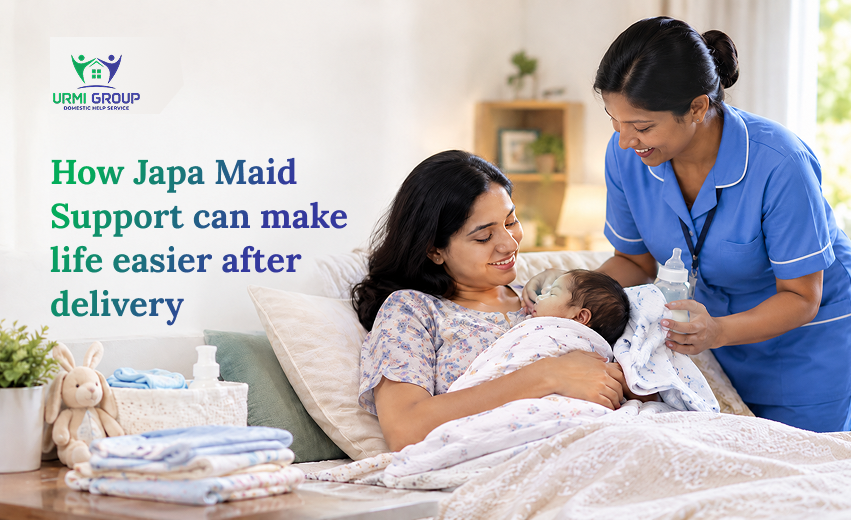
The first few weeks after delivery bring a big change to a family’s daily routine. A new mother needs time to rest and recover, while a newborn needs regular feeding, hygiene, sleep support and close attention. Meanwhile, the household work doesn’t stop.
This is where a Japa maid can help. She usually supports newborn care, postnatal recovery for the mother, and a few agreed household tasks. The exact duties can differ from family to family, depending on working hours and what you agree on before she joins.
For families adjusting to a new baby, the right support can make daily life more manageable and give the mother more time to recover and bond with her child.
Contents
- 1. What Is a Japa Maid?
- 2. How Japa Maid Services Help After Childbirth
- 3. Support for the New Mother
- 4. Help With Newborn Care
- 5. Feeding and Breastfeeding Support
- 6. Light Household Work Can Reduce the Daily Load
- 7. Part-Time Support for Families With Existing Help
- 8. Full-Time and Live-In Arrangements
- 9. Choosing the Right Person for Postnatal Support
- 10. Why Verification Matters
- 11. Japa Maid and In-Home Caregiver Support Are Not the Same
- 12. What About Home Babysitting?
- 13. Care Taker Services for New Mothers
- 14. Good Home Caring Follows the Family’s Routine
- 15. When Nursing or Medical Support May Be Needed
- 16. How to Prepare Before the Japa Maid Starts
- 17. Keep Communication Clear
- 18. Frequently Asked Questions
What Is a Japa Maid?
A Japa maid is a household caregiver who supports a mother and newborn during the post-delivery period. Her role can include baby care, feeding assistance, infant hygiene, help with the mother’s routine, and light household work.
Unlike a general domestic helper, her focus stays on the mother and baby. Look for someone with real experience handling newborns and understanding the rhythm that comes with a young baby.
Some families need this support for a few hours a day, while others prefer full-time or live-in arrangements.
How Japa Maid Services Help After Childbirth
The days right after childbirth can be exhausting. The mother is often adjusting to broken sleep, new feeding routines and a changed household rhythm, all at once.
Japa maid services typically cover tasks such as:
- Helping with baby feeding routines
- Changing diapers and maintaining infant hygiene
- Assisting with bathing and basic baby care
- Supporting the mother during feeding
- Preparing simple meals
- Helping with light cleaning
- Managing baby-related laundry
- Keeping the baby’s area organised
- Supporting a regular daily routine
None of this replaces the mother or the rest of the family. It simply frees up time and energy so the household can focus on the newborn.
Support for the New Mother
Recovery after delivery takes time. Interrupted sleep, feeding schedules and the physical demands of a newborn can leave a mother exhausted.
A Japa maid can handle everyday tasks and household responsibilities. At the same time, the mother focuses on recovery and her baby—preparing simple food, keeping the room organised, helping with baby-related work, and taking routine housework off her plate.
Discuss the mother’s specific needs before the arrangement begins, so there’s no confusion later about what support she can expect.
Help With Newborn Care
Newborns need attention around the clock. Feeding, diaper changes, bathing, sleep and hygiene fill up a large part of the day.
An experienced caregiver can help with these everyday tasks. Depending on what you agree on, this may include:
- Feeding assistance
- Diaper changing
- Baby bathing
- Basic infant hygiene
- Baby massage, where appropriate
- Organising baby clothes and supplies
- Helping maintain a sleep routine
- Keeping the baby’s surroundings clean
Stay involved in the important decisions about your baby. A caregiver offers hands-on help, but she isn’t a substitute for a doctor if your baby has a medical concern.
Feeding and Breastfeeding Support
Feeding can become the biggest part of a newborn’s routine. New parents often need an extra pair of hands while they learn to manage feeding, burping, changing and settling the baby.
A trained helper can support you around feeding and help the mother stay comfortable during the process. But any medical or lactation-related concern should go to a qualified healthcare professional, not the caregiver.
Her role stays simple: household and baby-care support, while medical questions go to the people trained to answer them.
Light Household Work Can Reduce the Daily Load
After delivery, even ordinary household tasks feel harder while everyone adjusts to a newborn.
Depending on the arrangement, newborn care may help with laundry, basic cleaning, organising the baby’s area and preparing simple meals — especially useful when other family members are stretched between work and home.
Agree on household duties upfront. Decide which tasks are included and which ones fall outside her role.
Part-Time Support for Families With Existing Help
Not every household needs a full-day arrangement. Some already have domestic help but need extra hands once the baby arrives.
Here, part-time support for specific hours can cover feeding, baby care, laundry, meal preparation or other agreed tasks. It also suits families with grandparents or relatives at home who still need backup during busy stretches.
Match the schedule to your actual routine rather than defaulting to the longest option available.
Full-Time and Live-In Arrangements
Some families prefer full-time support because newborn care runs all day and household routines get demanding fast.
A live-in arrangement means the caregiver stays at home — but that doesn’t mean continuous work for 24 hours. Agree clearly on working hours, rest periods, duties, meals, privacy and weekly time off. Clear terms make for a better working relationship on both sides.
Before choosing full-time or live-in help, think about the size of your home, the mother’s recovery needs, the baby’s routine and how much household work is actually involved.
Choosing the Right Person for Postnatal Support
Experience matters when someone will be working around your newborn. Ask about previous experience with babies, the household duties she’s handled, and her familiarity with postnatal care.
It also helps to discuss:
- Experience with newborn babies
- Feeding and hygiene support
- Previous postnatal work
- Working hours
- Household responsibilities
- Live-in or non-live-in requirements
- Leave and weekly rest
- Replacement arrangements
- Personal references and verification
Explain your household’s routine clearly from the start — a caregiver who understands your expectations early on settles in faster.
Why Verification Matters
Someone working inside your home with a newborn needs to be someone you feel comfortable around.
Ask any agency about its screening process, identity documents, background checks and references before you finalise a placement. Urmi Group’s Japa maid page describes identity and document verification, background checks, police-station verification and reference checks as part of its screening process, along with trial and replacement support if an arrangement doesn’t work out.
Still, confirm the specific verification steps completed for the person you’re actually considering — general policy and the individual placement aren’t always identical.
Japa Maid and In-Home Caregiver Support Are Not the Same
People use different terms when searching for help after childbirth — in-home caregiver, postnatal helper, newborn caregiver, maternity support. These roles overlap in day-to-day duties, but they aren’t always identical.
A Japa maid generally covers postnatal household and newborn support. If the mother or baby needs clinical treatment or medical monitoring, that calls for an appropriately qualified professional instead. The same goes for nursing care services — don’t treat them as the same thing as ordinary postnatal household help.
What About Home Babysitting?
Some families search for home babysitting when they need someone to watch the baby while they handle work or other commitments.
Babysitting and postnatal support serve different purposes. A babysitter mainly supervises the child, while a Japa maid supports both the mother and newborn alongside a few household tasks.
Before you hire, work out whether you need newborn care, support for the mother, babysitting, household help, or some mix of these.
Care Taker Services for New Mothers
Care taker services can mean several different things — help for an elderly person, a patient, a child, or a new mother. For post-delivery support, look specifically for someone with relevant newborn and postnatal experience rather than hiring whoever happens to be free.
The right match depends on the mother’s condition, the baby’s age, your household routine, and the duties you actually need covered.
Good Home Caring Follows the Family’s Routine
Home caring isn’t just about having another person in the house — it should make everyday responsibilities lighter without taking over the family’s role in caring for the baby.
A good arrangement has clear duties, sensible working hours and respectful communication on both sides. Review it again after the first few days too, since the baby’s routine can shift quickly and the mother’s needs change as recovery goes on.
When Nursing or Medical Support May Be Needed
A Japa maid can handle household and newborn support, but medical concerns call for professional care. Contact a doctor if the mother or baby shows any symptoms that need attention.
If you’re specifically looking for nursing care services, choose a qualified nursing professional whose training matches the medical needs involved. The same line applies to general home caring and caregiver support — none of it should stand in for clinical care.
How to Prepare Before the Japa Maid Starts
A little preparation makes the first few days easier. Before she begins, have ready:
- Baby clothes and hygiene supplies
- Feeding items
- Diapers and changing supplies
- Clean sleeping arrangements
- A simple list of household duties
- Important contact numbers
- Doctor and hospital details
- A basic daily routine
- Clear working hours and rest arrangements
Also share your preferences for baby care, meals, cleaning and household routines upfront.
Keep Communication Clear
Good communication heads off most problems. Explain duties rather than expecting her to guess. Instead of saying “take care of the house,” spell out whether that includes laundry, cleaning, meal preparation or baby-related work.
The same goes for the baby — walk her through the usual feeding schedule, sleeping routine and hygiene preferences. And if your needs change, say so openly rather than adding new responsibilities without agreement.
Final Thoughts
The weeks after childbirth are demanding for the whole family. The mother needs rest, recovery time and space to build a routine with her baby — while the household still needs meals, laundry, cleaning and everyday upkeep.
The right postnatal helper takes practical work off your plate and adds extra hands for newborn care, making the transition into this stage of parenthood more manageable. Clear duties, suitable working hours, relevant experience and proper verification all go into building a comfortable arrangement for the family and the caregiver alike.
If you’re looking for Japa maid support, Urmi Group offers postnatal and newborn assistance alongside household support through its Japa maid service. Confirm availability, duties and working arrangements based on what your family actually needs.
Frequently Asked Questions
She supports the mother and newborn with feeding assistance, infant hygiene, baby care, light household work, meal preparation and other agreed postnatal duties.
Yes. Part-time arrangements suit families that need support for selected hours rather than a full day. Discuss the schedule and duties before the placement begins.
No. A Japa maid mainly provides newborn, postnatal and household support. Medical treatment or clinical care should come from an appropriately qualified healthcare professional.
Ask about newborn-care experience, previous work, identity verification, background checks, references, working hours, responsibilities and replacement arrangements.
Yes. Depending on what you agree, support can include light cleaning, laundry, simple meal preparation and organising baby-related items alongside postnatal assistance.

Leave a Reply